Straight forward, witty and timeless. #TellItLikeItIs is a blog for our generation
The Nature Island of the Caribbean, it’s where we live; the place we call home. The gorgeously breathtaking island of Dominica or ‘Waitukubuli’ as the first settlers, the Kalinago once called it because of its mountainous form.
Islanders and visitors agree that Dominica is a gem to explore filled with fascinating adventures, landscapes, flora and fauna both above land and below the sea. It only takes one leap into one of its many natural pools and one snorkel at champagne reef or any of the other alluring sites that Dominica has to offer, to secure for oneself an inescapable addiction.
For conservationists, one of the unique features that put Dominica on the map is its plethora of wildlife; unique but mostly gentle animal kingdoms. Dominica is its own version of the Garden of Eden in this way. However, in recent years Dominica’s wildlife has been catching the eye of the regional and international communities for an unwelcomed reason. That is, the diminishing numbers of its species populations.
This has led to redoubled efforts to restore and grow the population of these now endangered species. For instance, the Mountain Chicken (scientific name Leptodactylus fallaxin and in local parlance called the ‘Crapaud’) indeginous to Dominica and Monsterrat, which was once considered the country’s national dish was very popular to be seen, heard and enjoyed when we were growing up. On rainy nights hearing this frog croak was a given. What about now? Do you hear that eerie call from one frog to another? Do today’s youth, the next generation even know what a Crapaud looks like? Have they seen a live mountain chicken or held one in their hands? The answers to these questions would likely be no.
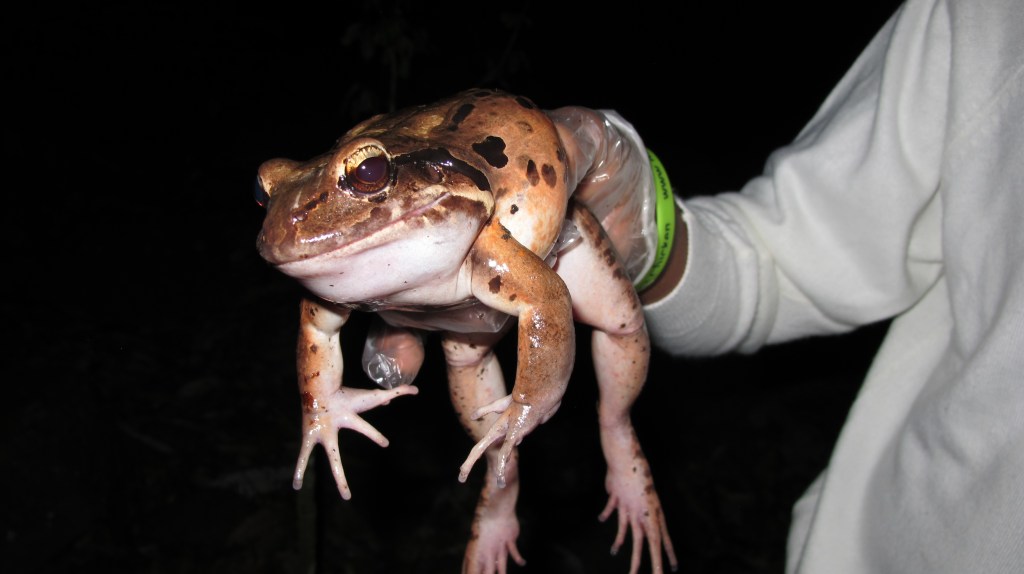
Dominica’s Mountain Chicken
This is because this animal is sadly on the brink of extinction and has been labeled as critically endangered by the Forestry and Wildlife Division of Dominica. Interestingly, it is not the work of a predator or even man-made actions which have caused the drastic decline in the mountain chicken population, but rather the chytrid fungus which affects other amphibians worldwide and first appeared on the island in 2002. This fungus wiped out almost three quarters of the Crapaud population in almost no time. Several NGOs have lent support, conducted research on the remaining numbers in the wild, and even commenced projects to explore in-captivity breeding, which are still ongoing but so far with little success.
Another of Dominica’s native species, which is slowly dwindling in number, is the Green Tail Iguana or‘ Lesser Antillean Iguana’. I’m sure you can remember seeing these hefty green animals with their super long green tails perched upon tree branches almost camouflaged by the leaves. And of course, you have heard tales of these reptiles making a delicious and healthy meal choice for those who indulge in exotic meats. Well I’m sorry to report that these too are also at risk of being wiped out, and this time by an invasive species.
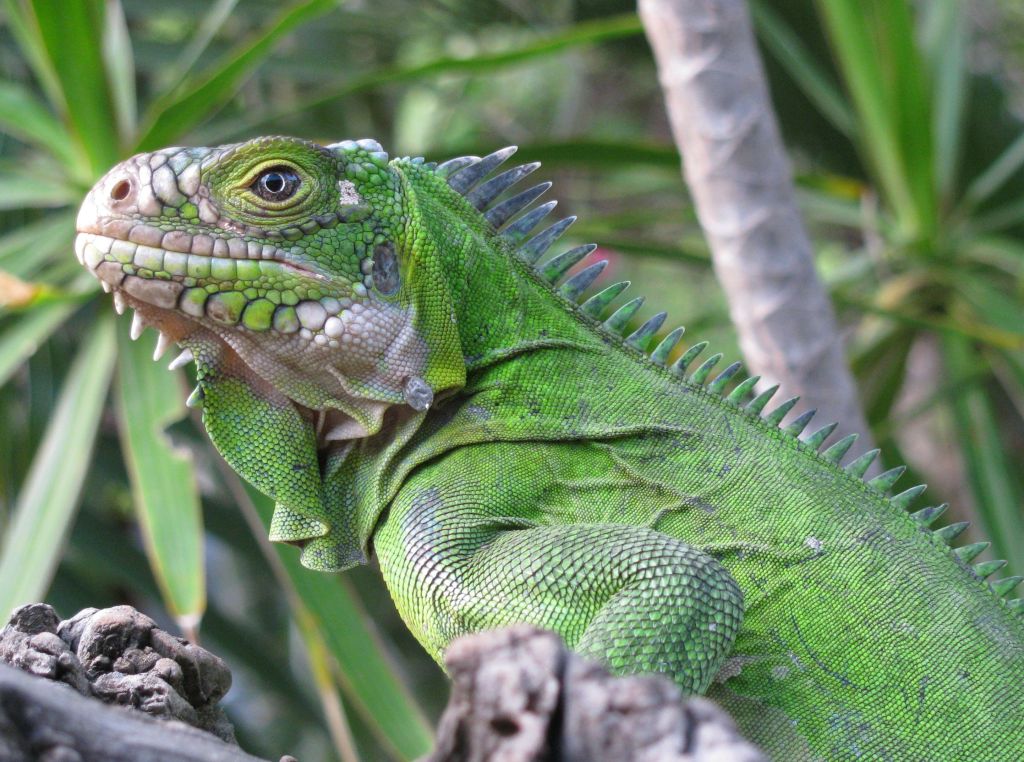
The Green tail Iguana. Photo credit Charles Knapp
A few short years ago, Dominica recorded the presence of the Striped Tail Iguana, which is a larger, stronger and more competitive iguana. This animal made its way to Dominica on one of many containers with relief supplies following the devastating Hurricane Maria in 2017. The Striped Tail Iguana beats out the local Green Tail Iguana for food sources, lays more eggs and therefore thrives in our country. The Striped Tail Iguana also mates with our local Green Tail Iguana hence not all striped tails you see are pure breeds, some are a hybrid. Efforts are ongoing to stop the growth and spread of this new species as it poses a threat to our ecosystem.
Here’s one more. You probably know of Dominica’s tallest mountain – Morne Diablotin. And another popular mountain named Morne Aux Diables. Well, you do know these mountains were named after the ‘Diablotin bird’? This bird, also known as the ‘Black Capped Petrel’ is considered extinct and according to the Ministry of Agriculture, the last known sighting of a nest was in 1862. Over the years due to excessive hunting, the introduction of mammals, and human interaction, development projects etc. the habitats of these birds were destroyed. Along with that, predators such as dogs, which invaded the homes of these animals contributed. The Diablotin bird is not a tree residing bird, but rather it burrows underground to nest and lay eggs, hence making it more prone to animals such as snakes, dogs and rodents.
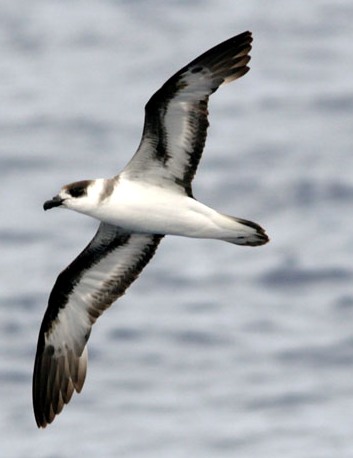
The Diablotin bird
These Black Capped Petrels were considered to be fully extinct until the 20th century when a bird was found near Peebles Park in Roseau in 1932. The next sighting of a Diablotin bird was in 2007 at Trafalgar. The Diablotin bird, which is also categorized as a seabird, is known to live at high elevations inland. These animals have the habit of flying out to sea in the morning and staying at sea for the day, then flying inland at night.
Scientists have visited the island on several occasions to look for Diablotin birds, but to no avail. They do hold out hope of finding these feathered creatures, as night time radar imagery has shown there are animals flying inland at night.
Now that you’ve gotten all this information on just 3 species endemic to Dominica (and we haven’t even looked at the plant & underwater species kingdoms!), imagine the vast number of others that may be in danger as well.
At this point you may be asking – So what? Why should I care? Why should I take part in the effort to conserve these species? What do I do about it? The answer is quite simple: Dominica is ‘The’ and ‘Our’ Nature Island of the Caribbean. We boast of things that other islands and countries only dream about so why not protect it in each of our own little corners of the island?
Having a healthy and diverse ecosystem full of flourishing and varied species only augurs well for the country. Apart from the right to survival, this island being a safe haven for these species can also be a great means of sustainable tourism where we can preserve the environment and generate some much needed revenue (yes, people pay good money for this sort of experience that we consider normal life).
Don’t you think that we, as Generation Y, should make a concerted effort to ensure future generations know what a Crapaud is? Above all, it is our responsibility to make our country and the earth a better place for all future generations (Isle to All so rich and fair, All must surely gaze in wonder at thy gifts so rich and rare…), playing our part is essential. Whether it is by standing firmly against hunting or harming these species if sighted in your area, or joining in on the many other ways that you can help by contacting the Forestry Division, It makes a difference. We can, and should be the generation to raise this awareness of species extinction, get this thing going, lend support however we can and leave our mark on this country in a remarkable and empowering way. Think about it.
Written by: Andrea Louis
For Generation Y Dominica