Straight forward, witty and timeless. #TellItLikeItIs, is a blog for our generation 

Dominica’s Carnival, known as “The Real Mas,” is not just a festival—it is an explosion of culture, history, and resilience. Unlike commercialized versions of Carnival seen in other parts of the Caribbean, Dominica’s celebration remains deeply rooted in tradition, pulsating with the raw energy of African heritage, French colonial influence, and indigenous Creole expression.
This festival is more than just music and revelry; it is a reflection of the island’s past, a testament to its people’s endurance, and a bold declaration of freedom. From the rhythmic beats of the drum to the elaborate masquerades that roam the streets, Carnival in Dominica is a living, breathing story of cultural pride.
The Origins of Carnival in Dominica
The roots of Dominica’s Carnival trace back to the 18th century, a time when the island was under French colonial rule. The French settlers, deeply Catholic, brought with them the tradition of pre-Lenten masquerade balls—lavish celebrations filled with music, dance, and extravagant costumes. However, these grand festivities were exclusively for the European elite, while the enslaved African population was forbidden from participating.
But the enslaved found ways to resist. In secret gatherings away from the plantations, they held their own celebrations, drawing on the rhythms and rituals of their African heritage. Drumming, call-and-response singing, and expressive dances became their means of preserving their identity and coping with oppression. These underground festivities served as acts of defiance, a spiritual escape from bondage, and the foundation of what would later evolve into Dominica’s unique Carnival tradition.
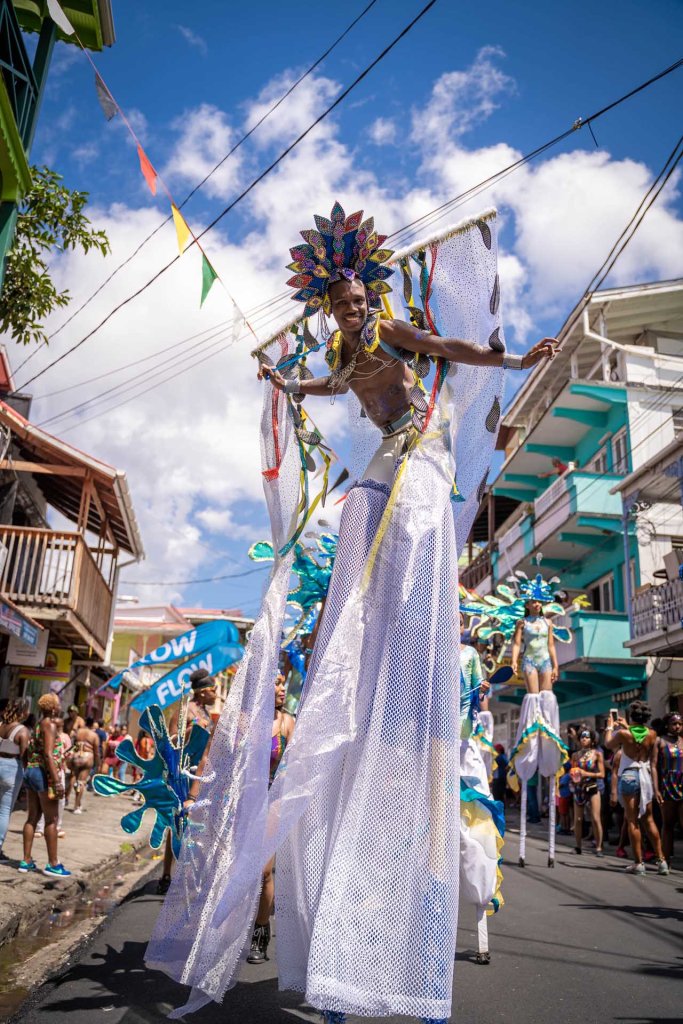
Stilt walkers or ‘ Bwa Bwa’
When slavery was abolished in 1834, formerly enslaved people reclaimed the streets in celebration, using Carnival as a bold expression of freedom. They took elements from the colonial masquerades and transformed them, adding their own powerful cultural symbols. One of the most striking examples is the sensay costume—a fearsome outfit made of shredded cloth, rope, and sometimes cow horns, meant to evoke African warrior spirits and ancestral strength.
As British rule took hold in Dominica, authorities attempted to suppress these celebrations, fearing their power as a form of resistance. But the people remained steadfast, keeping their traditions alive despite restrictions. Over time, what began as a small but defiant expression of liberation grew into the grand festival we now know as “The Real Mas.”
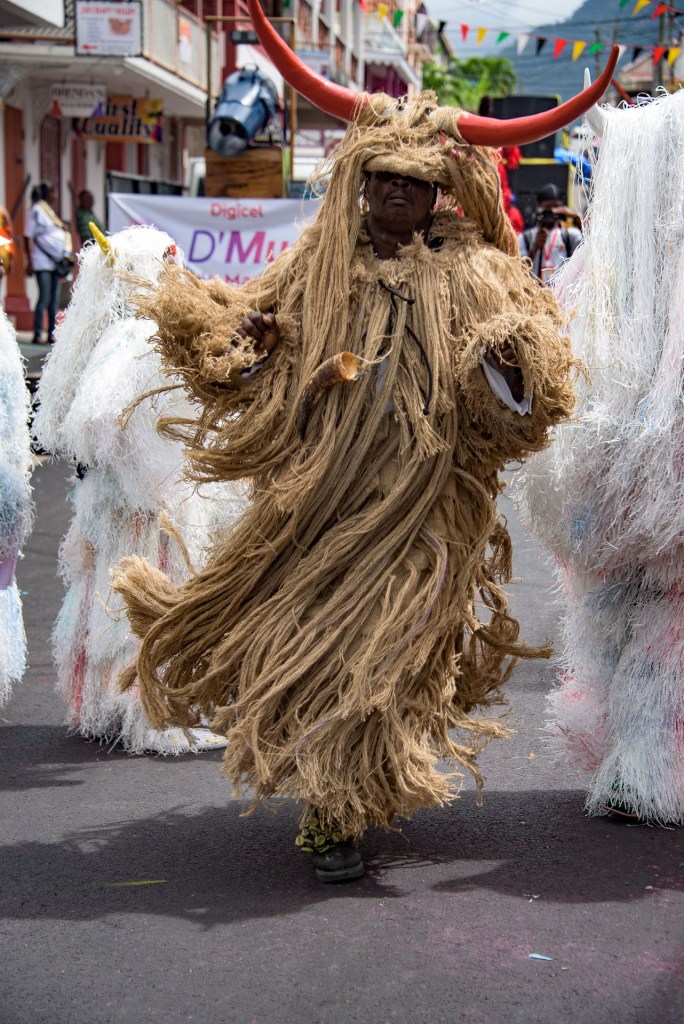
A traditional Sensay costume
Evolution of “The Real Mas”
Over the years, Dominica’s Carnival evolved into a unique expression of the island’s culture. Unlike some other Caribbean nations that adopted Trinidad’s style of Carnival, Dominica maintained its distinctive blend of African, French, and Creole influences.
By the mid-20th century, the festival became more structured, with the introduction of Calypso competitions, Queen Pageants, and organized street parades. The infectious sounds of Bouyon music, pioneered by bands like WCK in the late 1980s, further defined the island’s Carnival experience, adding a fast-paced, Dominican twist to the festivities.
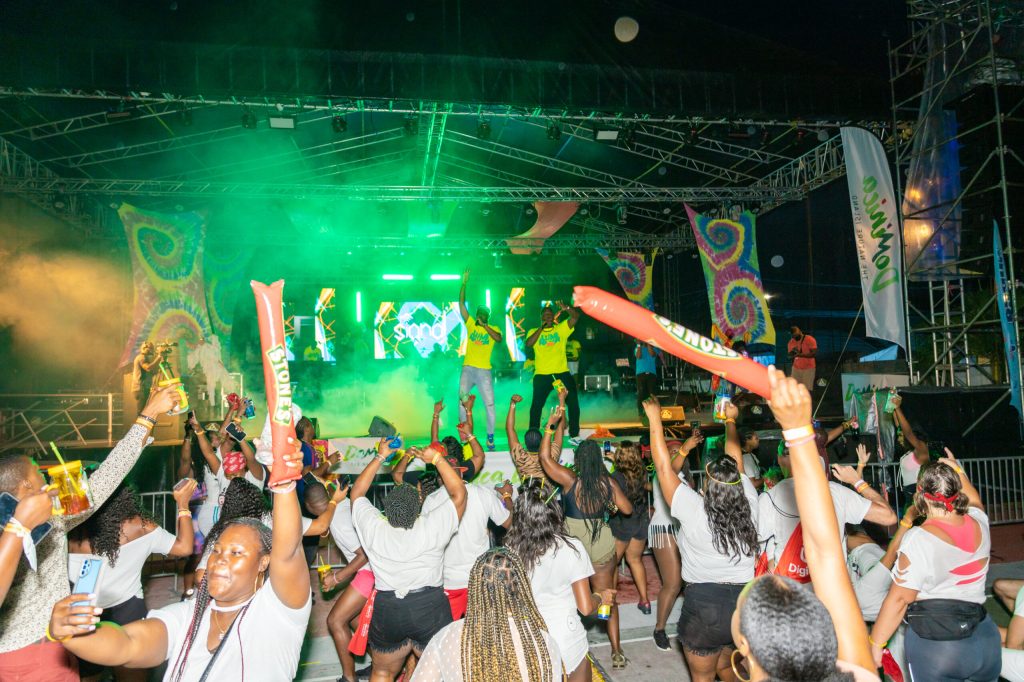
Despite modern influences, Dominica’s Carnival remains deeply connected to its roots, earning its title as ‘The Real Mas’ —a raw, authentic, and unfiltered celebration of culture, history, and freedom. Save the date to visit Dominica on March 3 & 4 2025.
Are you ready to experience The Real Mas? Let us know in the comments!
Written by: Dilma Bastien
For: Generation Y Dominica
All Photos credited to: dominicafestivals.com
 Generation Y Dominica