Straight forward, witty and timeless. #TellItLikeItIs, is a blog for our generation 
Language is vital to the development of humans and societies around the world. People communicate, using language, to bring across critical points which in turn have a significant impact on a population. Language, that is the spoken word, is the most common form of communication among people.
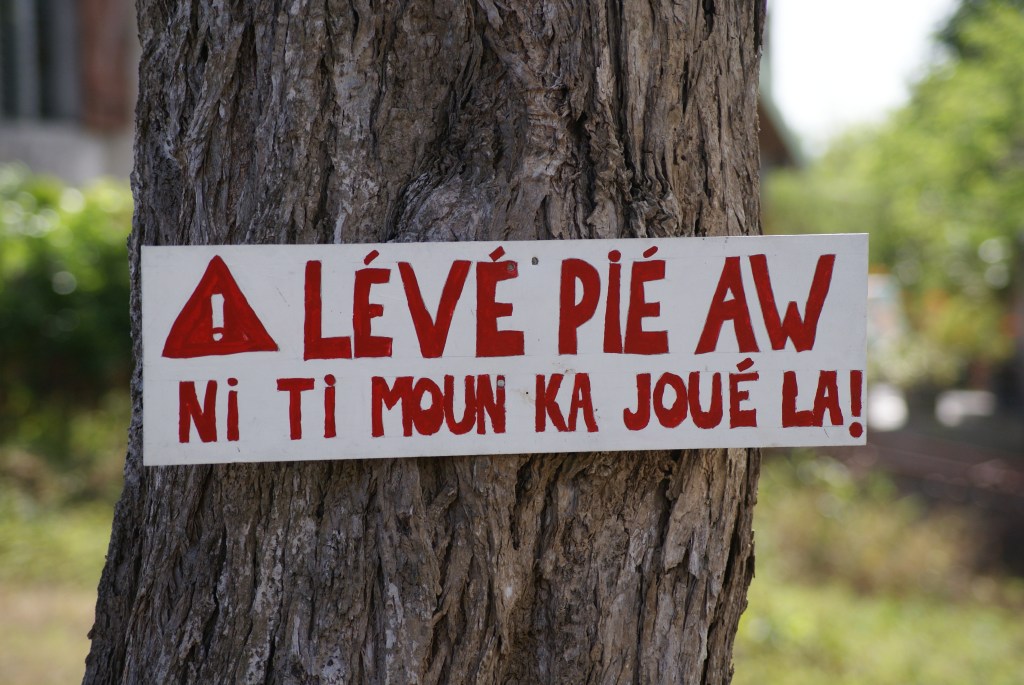
Oftentimes when languages are classified there is the standard language, then the derivative, or slang. In Dominica, our official language is English and we do have an English based slang, but there’s also our Dominican Creole. Dominican Creole refers to the island’s informal version of the standard French language.
The Creole is French based because Dominica was a colony which the French and English fought over – and ruled – several times in earlier centuries. If you were to search online, you would find out that a Creole Language is ‘a stable natural language developed from a mixture of different languages.’ In Dominica’s case our Creole consists of French, English, and traces of the native Kalinago and as well African languages. Despite the mix of languages, you can be reassured that creole is a complete language.
The Creole language, which exists in Dominica, is very rich and vibrant. It allows us to communicate among several other countries as well. English as the island’s official language spans across the globe. The French Creole language is – not a dominant language worldwide, and secondly, when French is learnt as a foreign language its Creole version is not taught.
These two features make French Creole more unique in that it is spoken by a special handful of countries and people around the world. For us in Dominica it allows us to easily communicate with our neighbors in the French speaking islands (Martinique and Guadeloupe) as well as St. Lucia, and that’s just for the Caribbean region. Moving further afield, our Creole allows us to interact with people from Seychelles, Réunion, and Mauritius, just to name a few.
Regardless of the unique nature and authenticity of our Creole we must look at it in a practical sense against the official French language.
Firstly, the French language is more widely practiced therefore having a grasp on this language will be more beneficial for global travel. Coupled with that is the fact that many of the countries which do speak French Creole also have French as the official language, therefore there is a good chance that some parts of the population may not know the Creole. Also, if you were to encounter someone who learnt French as a second language that person would not automatically know the Creole version because of its cocktail mix of words from other languages.
Creole, on the other hand, may be described as a more spicy version of French language. The way in which Dominicans deliver clever, witty pieces of advice or information in French creole, certainly gets the point across in a no nonsense manner. However, the Creole language can only truly be appreciated by those who know and understand it. Currently standard French is taught in the schools, with attempts to introduce the Creole language in a structured format. One Of the best ways to learn Creole though, is through having an adult at home speaking the language regularly in a more casual setting.
Therefore as regards French versus Creole, each has its own merit, hence why not learn the two? Having the foundation in French will make it easier to pick up the modified version – French Creole. Also it will allow for you to speak to a wider range of people if you can alternate between the two.
Written by: Andrea Louis
For Generation Y Dominica
 Generation Y Dominica